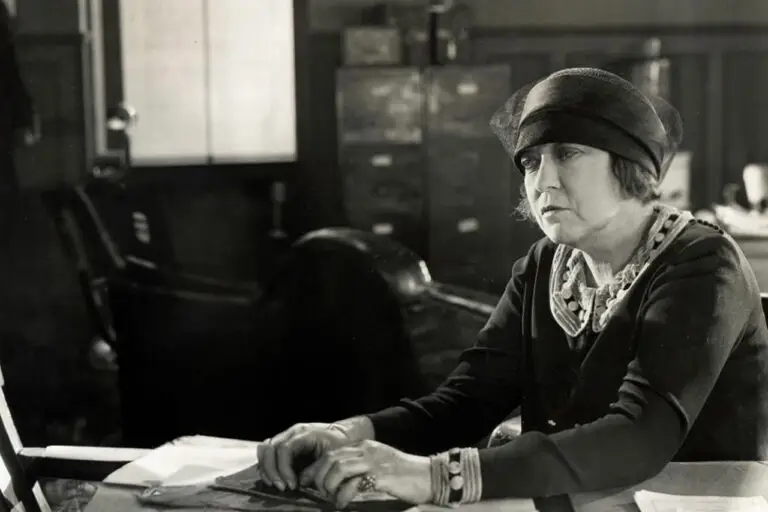
The Life of Mary Hamilton
Lorem ipsum dolor sit amet, consectetur adipiscing elit. Vivamus efficitur,
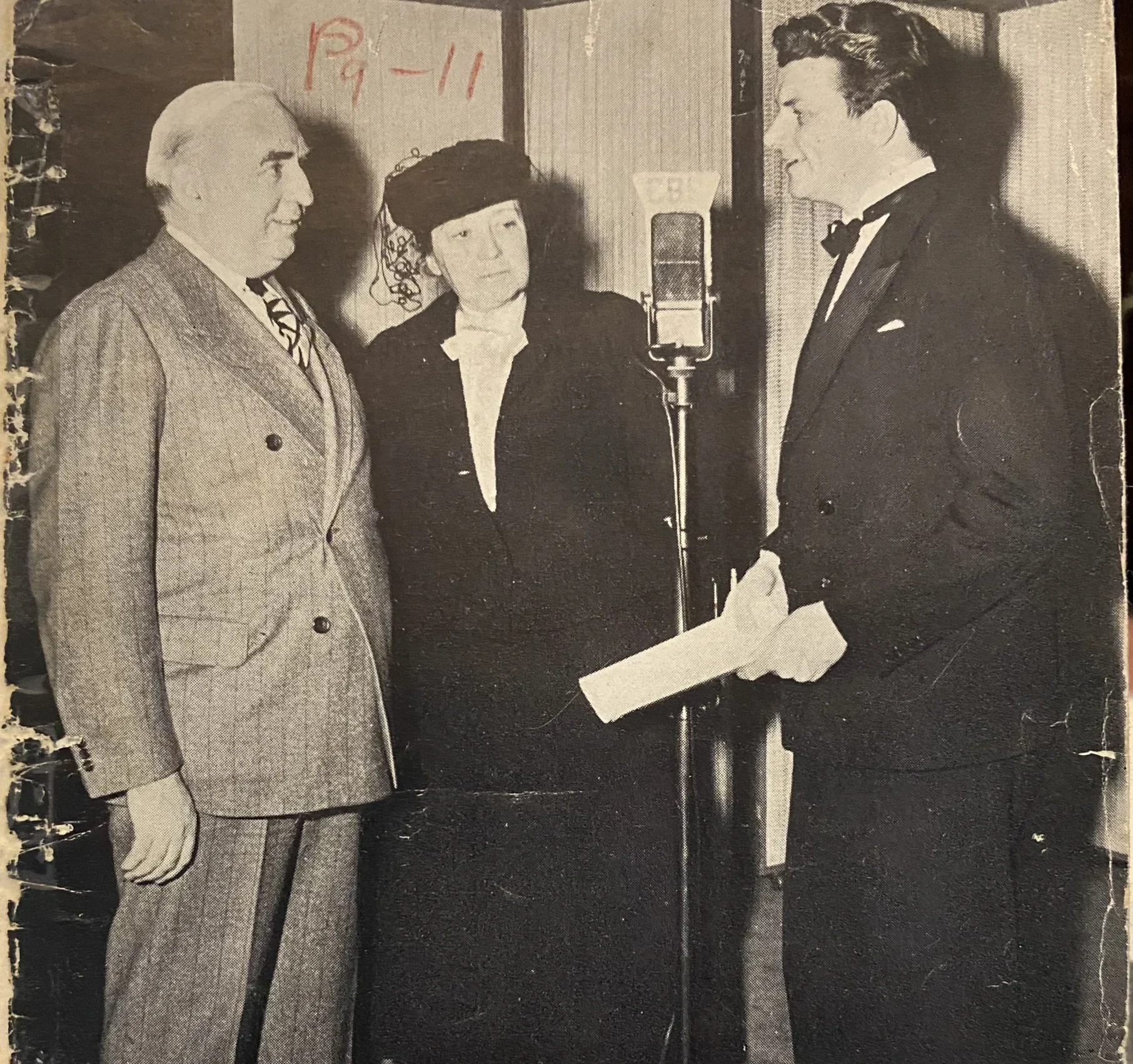
Through her own voice and a vivid reenactment, this interview captured the groundbreaking influence of Mary Hamilton—a woman who proved that courage and empathy could change the course of law enforcement. For our family, it holds special meaning, as we are still searching for a recording of this broadcast and have never actually heard her real voice.
In the interview, Hamilton shares how she began her career in 1917 after volunteering to start the Missing Persons Bureau. For eighteen months she worked without pay, determined to prove women belonged in the police force. Over the years, she helped organize the Missing Persons Bureau, the Bureau of Unidentified Dead, and the Policewoman’s Bureau, handling everything from fingerprinting in the morgue to investigating fellow officers.
Hamilton spoke about how her male colleagues welcomed her efforts, and how women detectives could often handle cases with special care—particularly when arresting female suspects. She also highlighted her pioneering work in fingerprinting, describing her school for training men and women and her push for universal fingerprinting, which was beginning to be written into law.
The program even staged a dramatic reenactment of one of her most moving cases: reuniting a young woman, abandoned as a baby, with her long-lost mother. This powerful story revealed not only the scientific side of detective work but also the deep compassion Hamilton brought to her role.
KING: Thank you very much, Mr. Schindler, and I’m glad you said that, because here in the studio with us now we have Mrs. Mary Hamilton, one of the country’s leading woman private detectives who was New York’s first policewoman and who runs her own finger printing school in New York today. She’s a refined type of person, quietly dressed, soft spoken, and very sincere, and more than that – Well, let Mrs. Hamilton speak for herself. How did you happen to get into detective work, Mrs. Hamilton?
HAMILTON: I was training for camp work as a hostess at Camp Upton during the World War, when the police commissioner asked for an assistant to start a missing persons bureau, which was needed after the death of a little girl.
HAMILTON: I worked for eighteen months without compensation, just to prove that there was a place for women in the Police Department.
HAMILTON: Since 1917
HAMILTON: I have helped organize the Missing Persons Bureaus, Bureau of Unidentified Dead, and the Policewoman’s Bureau. I’ve also done all kinds of work, from fingerprinting the unidentified in the morgue to investigation policemen.
HAMILTON: No. As a matter of fact, they have welcomed me and treated me kindly and at all times assisted me.
HAMILTON: Yes, I think in a case of an arrest a woman with knowledge of jiu jitsu can very carefully and more completely take a woman.
HAMILTON: She is less likely to be criticized adversely.
HAMILTON: I am directing a school for training men and women in finger- and footprinting for personal identification.
HAMILTON: Well, for the past nineteen years, we have been working for universal fingerprinting and I’m happy to say that our first bill, the Alien Bill, has now passed and it’s just a matter of days when we will have universal fingerprinting.
HAMILTON: We use the Henry system
HAMILTON: Yes. New York City is a magnet. It attracts all kinds of human beings from all parts of the world.
HAMILTON: Yes, for over seven years I’ve worked identifying, photographing, and fingerprinting them.
HAMILTON: Especially at holiday time in this great lonesome city-so many people commit suicide.
HAMILTON: I do. I think there’s a real field for them. I know that the women of England who have become scientific crime detectors will be followed very shortly by American women.
HAMILTON: Oh, I do, but sometimes I can really help. I remember one of the most interesting cases I had, as a policewoman in the Missing Persons Bureau. One day, when….
MRS H. (ACTRESS): Another lost relative?
MRS. H (ACTRESS): A foundling case?
MRS. H (ACTRESS): Hmmm-that doesn’t give us much clue-but it tells us something. That probably was the old Foundling Home where they always has a basket at the doorstep where destitute mothers could leave their babies, and have them cared for. Does that girl say she has any mark of identification? That Home always tattooed them with a small mark….
MRS. H (ACTRESS): Then our first step is to go and see the nuns of the foundling home.
MRS. H (ACTRESS): If we don’t do something she’s coming on to New York. Then perhaps she’ll find something she shouldn’t. Can’t you find a loop-hole this once? I feel we should do something for her. I’m sure we must.
MRS. H (ACTRESS): Certainly, I think that’s very wise. You think you can locate her?
HAMILTON: There was nothing more I could do. I returned to my office and with the dozens of cases streaming into the office every day, there was little time to think about one. I wrote the girl, and told her we were working-but not to come East until we notified her…and there I put the matter from my mind….About two weeks later….
MRS H. (ACTRESS): No-I’m just getting ready to go down to the morgue-there’s a drowning case there they want me to fingerprint….
MRS H. (ACTRESS): (Alert) Does she say what she wants?
MRS H. (ACTRESS): I do-I certainly do suppose-(Opens paper) Yes, it’s the cdlue the sisters gave me-its’s that mother. (Excited) Show her in!
MRS H. (ACTRESS): (Very gently) Yes-I’m Mrs. Hamilton
MRS H. (ACTRESS): Yes-I know where you daughter is.
MRS H. (ACTRESS): Yes-and happy. But she wants to see you.
MRS H. (ACTRESS): She musn’t see you like this. But it can be changed. Your hair-it’s beautiful hair…so thick…Your hands have a nice shape.
MRS H. (ACTRESS): Will you let us take case of you -fix you up-make you ready for this daughter of yours-get you some clothes…a little apartment?
MRS H. (ACTRESS): Yes.
ANNOUNCER KING: So you actually found that mother?
ANNOUNCER KING: Why, that’s more dramatic than a fictional story.
ANNOUNCER KING: Well, thank you, very much-Mrs. Hamilton-you’ve certainly given us an interesting visit. Now, ladies and gentlemen, we have another branch of detective work in this country-an all-important branch. Every city in this country has a police force-and a vital part of that force is the detective squad….Tonight we’re going to introduce you to the police detective on his job…And so we take you now to Police Headquarters in Philadelphia.
Lorem ipsum dolor sit amet, consectetur adipiscing elit. Vivamus efficitur,

Lorem ipsum dolor sit amet, consectetur adipiscing elit. Vivamus efficitur,

Lorem ipsum dolor sit amet, consectetur adipiscing elit. Vivamus efficitur,