The Life of Mary Hamilton
Lorem ipsum dolor sit amet, consectetur adipiscing elit. Vivamus efficitur,
Milestones: A Life of Resilience, Innovation, & Impact
Mary Ellen Coyne is born in Boston, MA, to Patrick Coyne (Ireland) and Bridget “Bessie” Agnes McDonough (born in Scotland to Irish parents). Article summary
Marries John Crowley, secretary of the Anti-Tenement House League in Boston; she later divorces him. Article summary
Birth of her son John Anthony Hamilton, who she later describes as her greatest “education” in understanding children and human nature. Article summary
Birth of her son John Anthony Hamilton, who she later describes as her greatest “education” in understanding children and human nature. Article summary
Marries William Hamilton; he dies sometime between 1900–1910, leaving her a widow. Article summary
Census lists her in Boston as a lamp shade designer, almost certainly working for Dennison Manufacturing Company, a detail she later mentions in print. Article summary
Joins the New York Police Department’s Missing Persons Bureau as a volunteer, helping build the bureau after the Ruth Cruger case; this is the start of her police career. Article summary
Officially appointed as New York City’s first policewoman / patrolwoman, attached to Missing Persons. Article summary
Tracks down Muriel Young, a disfigured 16-year-old runaway, in a widely reported case that highlights her sensitivity to girls who fled because of shame rather than crime.
Mar 8, 1921 – NYPD announces a brand-new Women’s Precinct in the old 22nd/37th Street “Hell’s Kitchen” station, with Mary E. Hamilton in charge as director.
May 3–4, 1921 – The Women’s Precinct is formally opened, with photos of Mary and her patrolwomen in New York papers; the station is renovated with dormitories, clinics, and classrooms to serve runaway girls and women.
A series of long feature articles describe Mary’s plans: detention floors for moral runaway girls, a clinic with Dr. Royal Copeland, a training school for policewomen, and an information bureau for women across the city.
After a power struggle with honorary deputy Mrs. Loft, Mary is removed as director of the Women’s Precinct and reassigned to Commissioner Enright’s office, though the precinct continues operating.
Apr 1922 – Assigned to a set of unknown skeletal remains found near Willow Grove, NY; she brings in retired Captain Grant Williams and pioneers forensic facial reconstruction to identify the victim.
May 4, 1922 – Families and officials identify the clay head as Lillian White, a missing Letchworth Village resident; newspapers credit Mary’s use of reconstruction as key to solving the case, making her the first known American officer to use the technique.
As editor of the women’s department of The Police Journal, Mary publishes her own theory on the Hall–Mills church murders, emphasizing bungled evidence and a likely hired-assassin scenario.
The Women’s Precinct operates for roughly two years, then is reorganized out of existence and replaced by other structures; later scholarship characterizes it as “short-lived” (1921–1923) under Mary’s initial leadership.
Publishes The Policewoman: Her Service and Ideals, a 200-page book that mixes autobiography, case studies, and a manifesto for preventive, social-service-oriented policing.
Appointed director of the Women’s Police Bureau, becoming New York’s first female police field supervisor, overseeing policewomen across the city.
Sells her life and case stories to Universal / Belban-related producers. The movie was never produced. Reward for script in place.
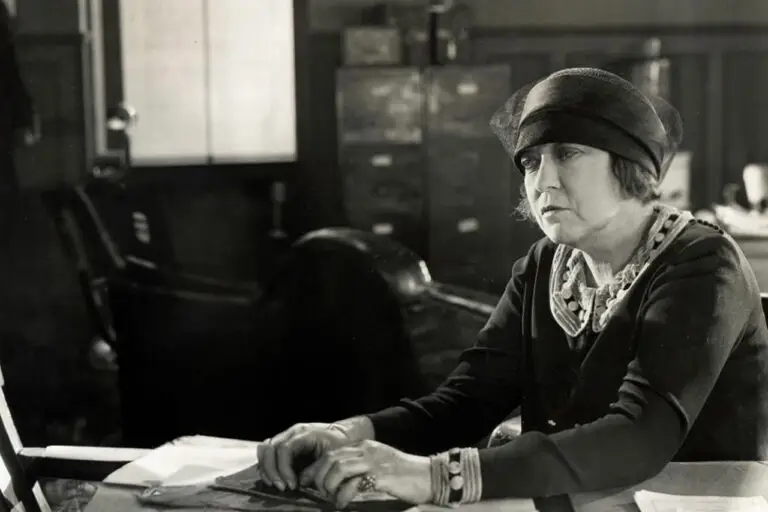
The silent film Lilies of the Streets premieres; Mary E. Hamilton is credited as the producer and appears on screen as “Mrs. Hamilton (herself),” bringing her missing-girls work to a national audience.
Resigns from the NYPD, reportedly feeling that policewomen would always be limited in matching men on the enforcement side and should focus on preventive and protective work for women and children.
Runs a fingerprint and footprint identification school in New York and tours to lecture women’s clubs and police groups on missing persons, runaway girls, and universal fingerprinting.
Appears on John Reed King’s national CBS program over WABC–New York, where she recounts working 18 months without pay, founding the Missing Persons Bureau, her push for universal fingerprinting, and the dramatic “foundling reunion” case dramatized on air.
Cited in police histories as New York’s first policewoman and as a pioneer in missing-persons work and crime detection.
First police women in MULTIPLE jurisdictions - Very rare.
Appointed Woburn, MA’s first woman police officer, Mary takes a voluntary, unpaid position as a special officer, sworn in by City Clerk Margaret Fitzgerald and assigned by Chief Charles R. McCauley.
At age 72, she launches a citywide program to combat juvenile delinquency, especially among girls, emphasizing investigation, family background analysis, and prevention — proudly stating she had never arrested a teen and “did not intend to start now.”
Resigns from the NYPD, reportedly feeling that policewomen would always be limited in matching men on the enforcement side and should focus on preventive and protective work for women and children.
Dies aged 81 in Woburn, Massachusetts; death certificate lists her as widowed, occupation retired policewoman, cause arteriosclerotic heart disease.
The NYPD’s internal magazine (Spring 3100, Vol. 21, Issue 7) runs a retrospective on the Bureau of Policewomen, including photos and discussion of the early Women’s Precinct and Mary’s pioneering role – one of the earliest institutional “memory” pieces about her after her death.
Within NYPD histories and training materials, Mary starts being cited as a symbolic “first” for policewomen, especially when charting the transition from matrons to fully sworn officers.
NYPD’s Spring 3100 issues on Women’s History Month and “Memorabilia” include Mary and the Women’s Precinct in timelines and photo essays, explicitly connecting her 1920s work to the modern integration of women at every rank.
Historian Dorothy Moses Schulz publishes “The New York City Women’s Precinct, 1921–1923,” analyzing Mary’s leadership, the politics that undercut her, and why the experiment was dismantled.
The blog Captured & Exposed publishes “Her Skull Speaks”, retelling the Lillian White skull case and crediting Mary as the first American officer to use facial reconstruction in an identification.
Crime-history blogs and Pinterest/Flickr posts referencing “Her Skull Speaks” circulate images and summaries of Mary’s forensic work, giving her a new digital footprint.
Her descendants launch MaryHamilton.org, consolidate clippings, and commission new research into her films, cases, and radio work, dramatically expanding her modern profile.
The New York Daily News “Justice Story” column revisits the Cheesecote Mountain skeleton case, highlighting Mary as the detective who connected Lillian White’s remains to serial killer Harry A. Kirby and again stressing her pioneering reconstruction work.
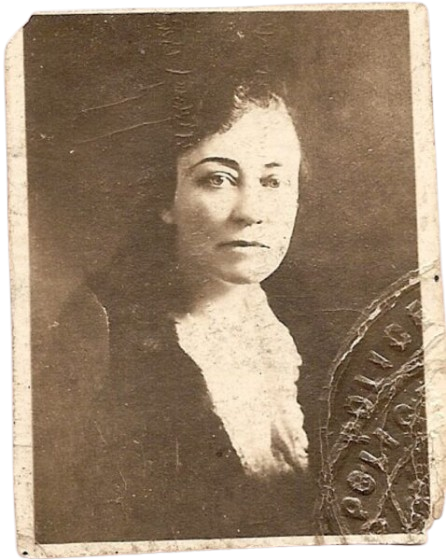

Mary E. Hamilton spent her life redefining what it means to be brave.Not the kind of bravery that depends on a badge, a weapon, or the adrenaline of a chase — but a deeper, quieter courage that begins long before anyone is watching.
Mary showed us that real bravery is social bravery: the willingness to step into rooms where women weren’t invited, to speak for those who had no voice, to protect children who had vanished into the margins, to challenge systems that had never imagined a woman in uniform, and to build new structures — like the First Women’s Precinct — that society didn’t yet know it needed.
She taught that courage isn’t simply reacting to danger.
It is planning ahead to prevent it.
It is studying footprints long before forensics had textbooks.
It is tracking missing girls before the nation had Amber Alerts.
It is opening a precinct designed to protect rather than punish — decades before the world understood trauma-informed policing.
Mary’s bravery was proactive.
Deliberate.
Architectural.
She believed that protecting one person today could protect ten more tomorrow. She believed in systems, not spotlights. In preparation, not applause. In showing up early to the problems everyone else noticed too late. And that is why her story is far from over.
Today, nearly a century after she walked the streets of New York in her plainclothes detective suit, Mary’s life is being rediscovered by historians, policewomen, filmmakers, genealogists, and families who see in her a blueprint for a more compassionate kind of justice.
Her influence is poised to expand in ways she could never have imagined:
Every rediscovered article and every new researcher adds another beam to the structure she began building in 1917 — the belief that policing must protect as fiercely as it enforces.
Mary’s legacy reminds us that bravery evolves.
Today, bravery looks like:
This is the bravery Mary modeled.
This is the bravery her future legacy calls us toward.
Mary did not just serve New York City —
she served the idea that society can be kinder, more aware, and more prepared.
Her rediscovery today is not an accident.
It is a continuation.
A reminder.
A calling.
Her courage wasn’t merely historical — it was instructional.
And now, as new chapters unfold — through digital archives, public exhibits, film restoration efforts, genealogical research, and the work of those who honor her name — Mary E. Hamilton steps once again into the future.
Still guiding.
Still protecting.
Still pioneering.
Lorem ipsum dolor sit amet, consectetur adipiscing elit. Vivamus efficitur,

Lorem ipsum dolor sit amet, consectetur adipiscing elit. Vivamus efficitur,

Lorem ipsum dolor sit amet, consectetur adipiscing elit. Vivamus efficitur,