Gun On The Train
My Most Thrilling Moment
Based on a February 28, 1926 article in the Oakland Tribune
Mary E. Hamilton was escorting a confused elderly woman home from a city park when an ordinary train ride turned into a fight for survival.
The train rattled along the elevated tracks that ran above Third Avenue, metal clattering in the cold afternoon light. Mary E. Hamilton settled into one of the cross seats, keeping a gentle eye on the elderly woman beside her. The poor soul had been found wandering alone in one of the parks—confused, well-dressed, and without a clear memory of how she’d gotten there. Mary’s task was simple: escort her safely home to Park Avenue.
The woman had insisted on taking this particular seat, and Mary humored her, thinking nothing of it. But as she shifted to make herself comfortable, she felt something hard press against her right side. It was firm, cold… deliberate.
She glanced down.
A revolver—held steadily in the frail-looking hand of the woman she was supposed to protect—rested against her ribs.
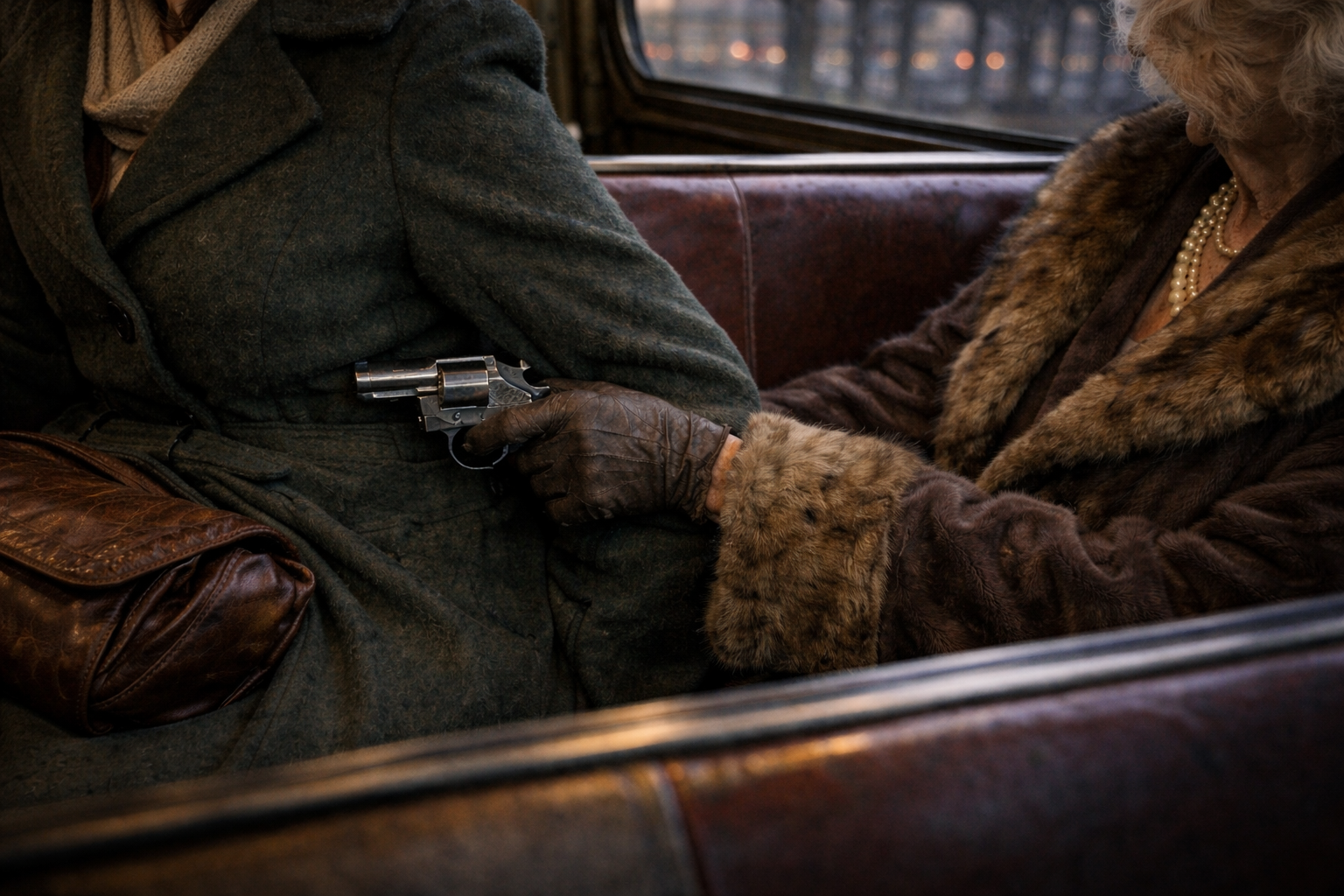
“I’m going to kill myself,”
the woman said in a tone as calm as if she were announcing the time of day. “But I don’t like to go alone, so I’ve decided to take you with me. I’m going to shoot you when we reach the next stop. If you move or speak to anybody, I won’t wait that long.”
Mary’s heartbeat thudded so loudly she wondered if the woman could hear it. The car was nearly empty; there would be no help from strangers. Panic surged—hot, electric—but she forced her voice into something steady, almost casual.
“It’s a good idea,”
She replied softly.
“I’ve been planning on dying myself for a long time.”
The woman’s eyes flicked toward her, puzzled but listening.
“But you’re artistic, aren’t you? I can tell.” Mary managed a faint smile. “Well, so am I. What would our friends think if we passed away in such an unaesthetic place as the Third Avenue L? Now, I know a lovely cemetery not far out of town. Much more fitting.”
The gun wavered just a fraction.
“Let’s get off at Grand Central,” Mary continued, coaxing her gently. “I’ll telephone my maid to bring us a little vial of prussic acid. That’s far more dignified than a gun.”
For a moment, the woman said nothing. Then she nodded, slowly, almost thoughtfully. When the train pulled into the next station, both women rose and stepped onto the platform together—one calmly determined, the other trying not to collapse from the relief surging through her.
But Grand Central offered no refuge. Not a single patrolman was in sight.
Inside a telephone booth, Mary dialed three wrong numbers in rapid succession, letting the seconds stretch while keeping her voice light and her hands from shaking. Then she turned to the woman.
“Could you get us a few more nickels from the counter? We’ll need them.”
The woman obliged. The moment she was out of earshot, Mary called police headquarters. Within minutes—though they felt like hours—several officers rushed into the station.
The elderly woman saw them before they reached her. Her eyes widened; the revolver flashed upward again, this time pointed straight at Mary’s chest.
One of the officers lunged, knocking the weapon from her hand just in time. It clattered across the floor, skidding beneath a bench.
Mary finally exhaled the breath she’d been holding since the train ride began.
It was only the beginning of her career, but she understood already: in her line of work, survival wasn’t just bravery. It was thinking faster than fear.