Her Skull Speaks
How Mary E. Hamilton used a radical forensic technique in 1922—and changed criminal identification forever.
April 1922. Rural New York, north of the city. The kind of place where secrets don’t stay buried forever.
They didn’t find a name.
They found bones.
A skull. Fragmented remains. Enough for doctors to determine the victim was a young woman—but not enough to say who she was. Without a name, the case stalled. No family to question. No history to trace. Just a violent death and silence.
The Police Commissioner assigned the case to Mary E. Hamilton.
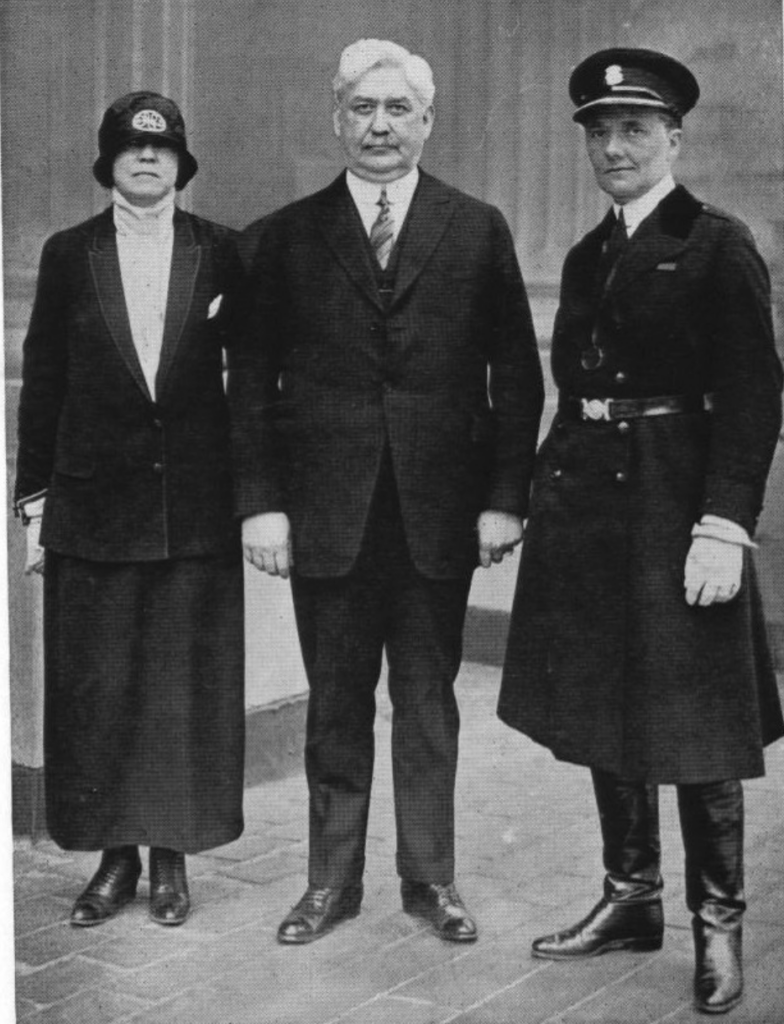
Hamilton wasn’t supposed to be here. She was the head of the NYPD’s short-lived Women’s Precinct, the first policewoman to serve in New York City in a command role. She had already spent years pushing against the edges of what women were allowed to do in law enforcement. This case would push those edges even further.
Hamilton understood the problem immediately: you can’t solve a murder if you don’t know who was murdered.
So she reached for an idea that, in 1922, was still unproven—almost experimental.
She would rebuild the victim’s face.
Hamilton contacted Grant Williams, a retired police captain with expertise in identification. What he did next had never been done before in American policing.
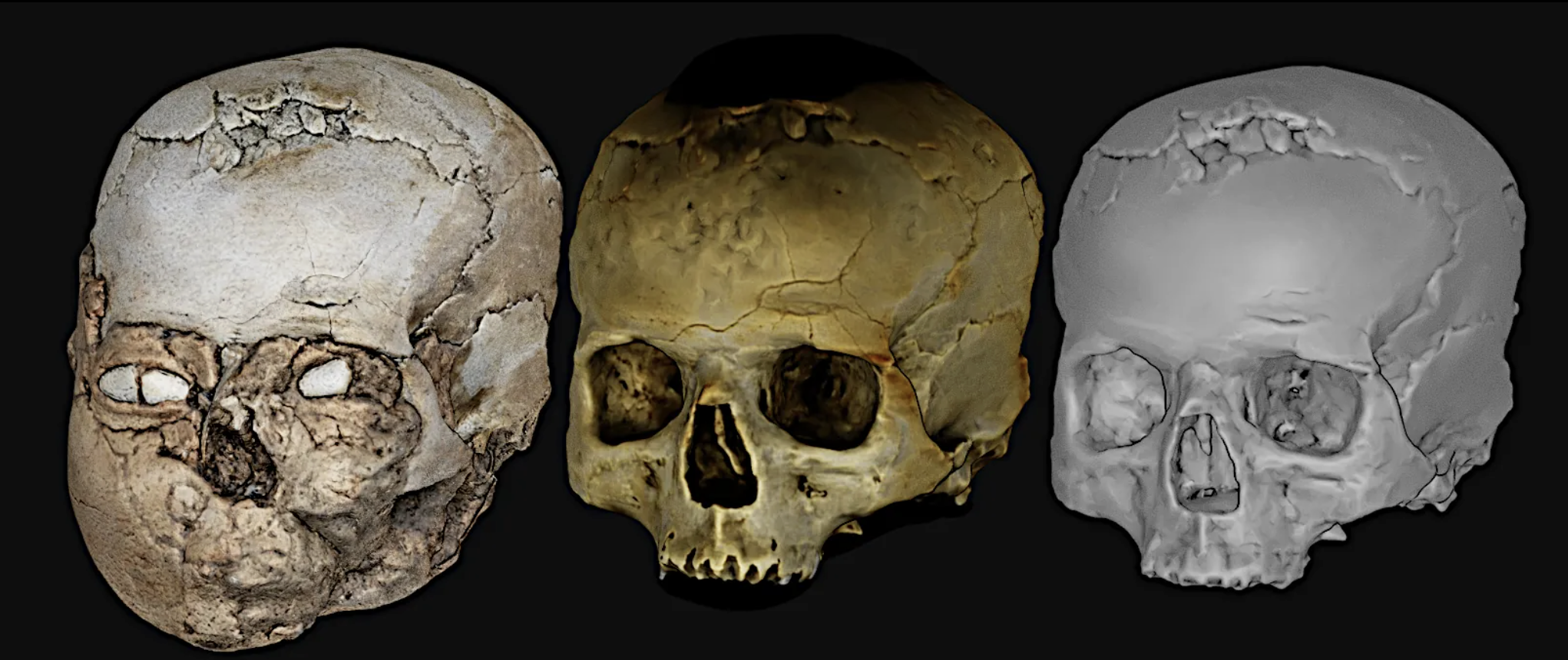
Williams sterilized the skull and mounted it. He applied layers of plaster, wax, and modeling material, following the structure of the bone beneath. He rebuilt muscle where muscle would have been. He shaped the nose, mouth, and eyes using anatomical proportion and geometry.
When the form was complete, he painted the face a flesh tone, set glass eyes into their sockets, and added hair.
The skull became a face.
Not a guess. Not an illustration.
A human likeness.
Hamilton took the finished reconstruction to Letchworth Village, an institution in Rockland County. The reaction was immediate. Dr. Little, the superintendent, recognized her at once. Staff members confirmed it. The woman was Lillian White, a former patient who had disappeared months earlier.
Hamilton then brought the reconstruction to New York City.
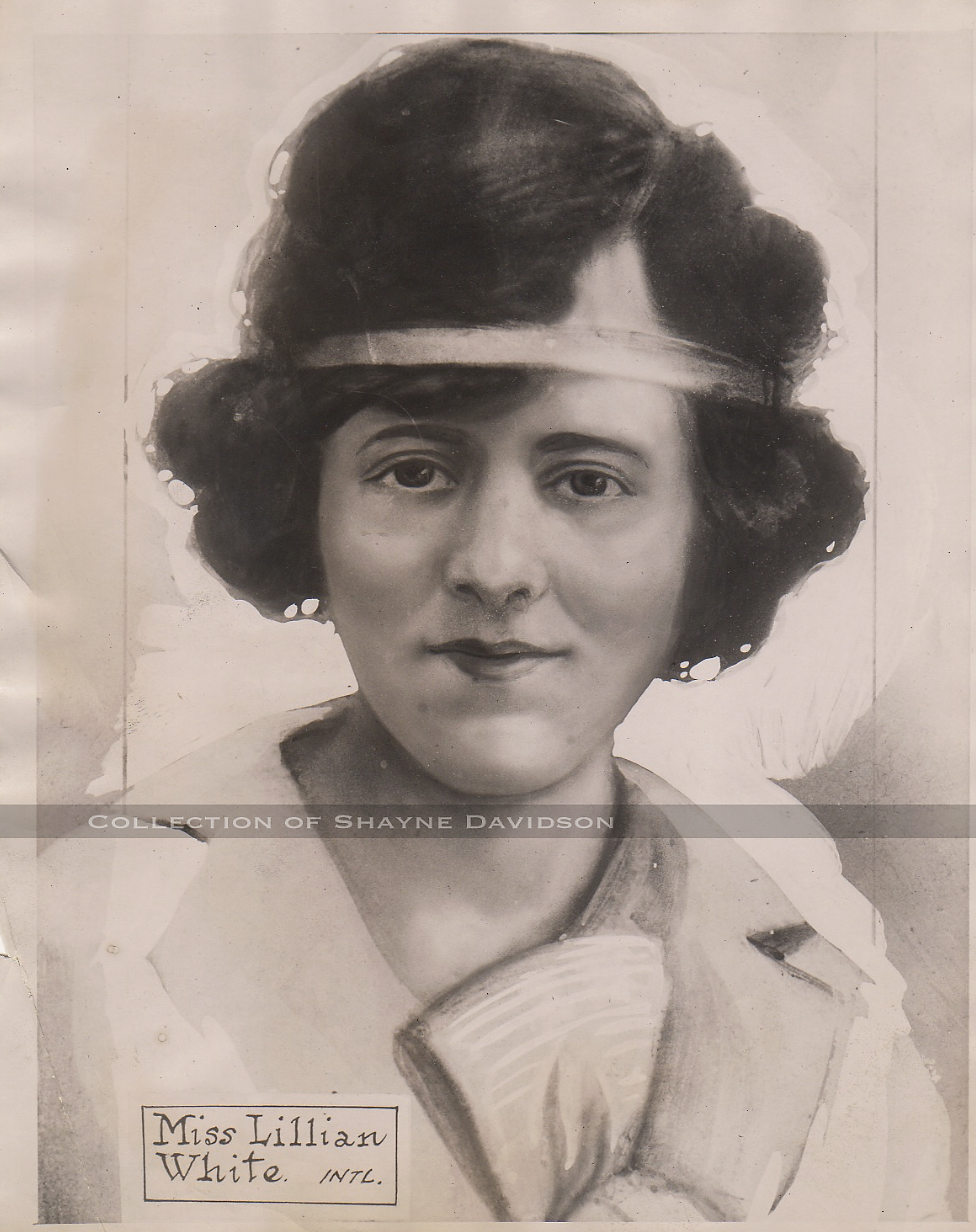
“My God — it is Lillian. I can tell by the face. It is the face of my dead sister.”
On May 4, 1922, Hamilton invited Lillian’s sisters, Rose and Catherine, to her apartment in Chelsea. When they saw the reconstructed head, recognition was instant. One sister collapsed from shock. The other swore vengeance on whoever had done this.
A New York court officially ruled that the remains were those of Lillian White.
And there was no ambiguity about her death.
She had been struck repeatedly in the head with a blunt object. Her body had been wrapped in old newspapers and left to decompose. This was murder.
With Lillian identified, Hamilton could finally move backward through her life—and quickly a name surfaced.
James Crawford. Also known as Harry A. Kirby.
He had been an attendant at Letchworth Village. A “supposed sweetheart.” A man who disappeared just as suspicion began to grow.
Police collected his fingerprints, but Kirby was already gone.
Three years later, he resurfaced in Maine.
Kirby was arrested in Augusta for the abduction and strangulation of another woman, Aida Hayward, and the attempted murder of Hayward’s aunt. While being held in jail, before he could stand trial, Kirby killed himself—slashing his wrists with a razor blade.
There would be no courtroom reckoning. No sentence. No confession for Lillian White.
But there was something else.
There was certainty.
Hamilton retired from the NYPD in 1926, but she never stopped advocating for scientific identification—especially fingerprinting and evidence-based policing. The method she helped introduce in 1922, facial reconstruction from skeletal remains, is now a standard forensic tool used around the world.
At the time, newspapers described the case as “stranger than fiction.” A syndicated 1922 article told readers that New York police had restored the face of a girl from a skull found in the Haverstraw Mountains—crediting Grant Williams for the reconstruction and Mary Hamilton for guiding the investigation so the victim could finally be identified as Lillian White.
This was the first known case in American law enforcement where facial reconstruction was successfully used to identify a murder victim.
Mary E. Hamilton didn’t just solve a case.
She changed what was possible.
She gave the dead a face, a family an answer, and forensic science a future.
Historical References
- 1922 syndicated newspaper coverage (Capital Journal, Salem, Oregon) describing the reconstruction and identification of Lillian White
- Shayne Davidson, “Her Skull Speaks” (2017), historical reconstruction of the case
- Contemporary reporting on the arrest and death of Harry A. Kirby
- NYPD historical records on Mary E. Hamilton and the Women’s Precinct